
Finding Your Calling

Every month—and sometimes every week—someone reaches out asking for career advice. In fact, while writing these words, I was interrupted by someone seeking counsel about the next chapter of a professional life.
Each conversation carries me backward. Before I had any answers to offer, I was asking the same questions. Like many people early in their careers, I was trying to distinguish between a successful life and a meaningful one.
As a young lawyer in a large New York law firm, I faced such a crossroads: whether to transfer to the firm’s Paris office or become an Assistant U.S. Attorney in Dayton, Ohio. The choice seemed almost comical. I went to Paris.
Yet geography did not settle the deeper question.
Corporate law offered challenge, prestige, exotic travel, and economic opportunity. But beneath the satisfaction of achievement was a persistent sense that I was preparing for something else. I found myself increasingly drawn not simply to a profession, but to the possibility of serving what I felt was a greater purpose.
That restlessness eventually compelled me to write someone whose life embodied that ideal—John F. Kennedy’s speechwriter, Ted Sorensen. His reply remains framed on my wall, not because it answered every question, but because it affirmed that the questions themselves mattered.
“Dear Mr. Sorensen – Having admired you and your contributions to our country for many years, I am writing to ask for your advice. I am a third-year associate at a major New York law firm practicing corporate law….I am finding corporate practice today to be document-intensive and uninspiring. I very much want to serve our country in some way…..I find myself reading books on the Constitution and Lincoln-Douglas debates rather than Anatomy of a Merger and the Securities Law Reporter. Do you have any thoughts about what someone with my background and experience might do to serve his country? I worry that much of my generation’s talent is focused on the pursuit of the dollar.”
Less than a week later came his response. I remember to this day seeing his return address on the envelope -- and opening his letter in disbelief that he would take the time to write a complete stranger.
“Dear Mr. Bridgeland -- Thank you for your thoughtful letter with which I sympathize. You should not despair about the fact that you are building a professional and financial base from which you can more easily move to public service in later years. If you want an early change, however, you could seek ….” [and he goes on to outline four compelling options]. He ends his letter like it is a line in an Inaugural Address, “I hope very much that your desire to do public service will continue to burn brightly and be fulfilled in due time.”
Some letters answer immediate questions. Others quietly shape an entire life.
Years later, while serving in the White House, I formed a bit of a posse. Ted became one of several people I sought out whenever difficult decisions arose. Alongside him were Lyndon Johnson’s Joseph Califano, Ronald Reagan’s and George H.W. Bush’s Roger Porter, and Bill Clinton’s Bruce Reed. They had different views in the swirl of political debates. Yet they shared something more enduring: a conviction that public service is ultimately about stewardship rather than ideology. Their friendship reminded me that wisdom often ignores partisan boundaries.
Sorensen counseled, “work closely with the speechwriter – how the President conveys the idea is as important as the underlying policy you will work on.” Califano, who had worked on civil rights legislation, the war on poverty, and more, shared an inspiration and caution -- “big ideas inspire people, the system will encourage incrementalism.” Porter urged that we examine whether programs had evidence of effectiveness before expanding them and to be mindful of the taxpayer. Reed just handed us a bottle of whiskey.
Near the end of my White House service, another providential conversation occurred.
A dear friend, Tom Tierney, who had co-founded Bridgespan, flew to Washington to have lunch with me in the White House Mess and offer good counsel. He arrived not with answers but with questions—questions that proved more valuable than advice. What he offered that afternoon has become the framework I now share whenever someone asks me how to discover a calling.
First, make a list of every moment in your life when you lost all awareness of time and place because you were completely absorbed in what you were doing. Don’t be shy about naming the oddest things.
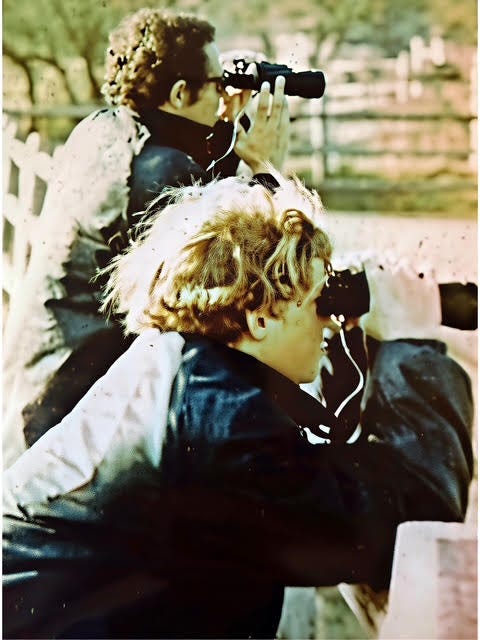
My own list made me laugh. Among the first entries were long days with my father in our national parks, watching birds and searching for the Ivory-billed Woodpecker, believed to be extinct since 1944. At the time I wrote them down, those memories seemed professionally irrelevant.
Second, make a list of the people you most admire and ask yourself what drew you to them.
I expected to write down senators and presidents. Instead, I found myself naming Gandhi, Martin Luther King, Rachel Carson, Sargent Shriver, and others who never held elective office but altered history through institutions of their own creation, ideas, and moral imagination. They did not wait for permission to serve. They built platforms from which service became possible.
Third, seek out those who know you well—parents, teachers, roommates, advisers, pastors—and ask what they see when they look at your life. Nothing great happens alone.
Those conversations gradually changed the question I had been asking. I had been trying to determine what job I should pursue. Instead, I began asking what kind of work I had been uniquely created to do. It was a profound shift.
A career can provide income and accomplishment. A calling provides coherence.
Fourth, write down the concrete standards by which you will judge whether to pursue an opportunity.
When I made my list, certain themes emerged with unmistakable clarity. I wanted to build things. I wanted to gather remarkable people around worthy purposes. I wanted variety, creativity, and entrepreneurship. Just as importantly, I recognized what diminished me: bureaucracy, endless hierarchies, and lives measured by billable hours or someone else’s agenda. Clarity often arrives not only by knowing what draws us, but also by knowing what does not. And I was willing to take risks and lose comfort for a calling.
Fifth, list every opportunity available to you—including ones you might create yourself.
That idea alone was liberating. I had always assumed vocation meant finding the right position. Tom reminded me that some of the most meaningful work is not found. It is built.
His final counsel seemed almost too simple to matter. Spend 20 minutes every day in complete silence. Not strategizing. Not planning. Not producing. Simply becoming quiet enough to hear what constant activity often drowns out.
Over time, that silence revealed something I have never forgotten.
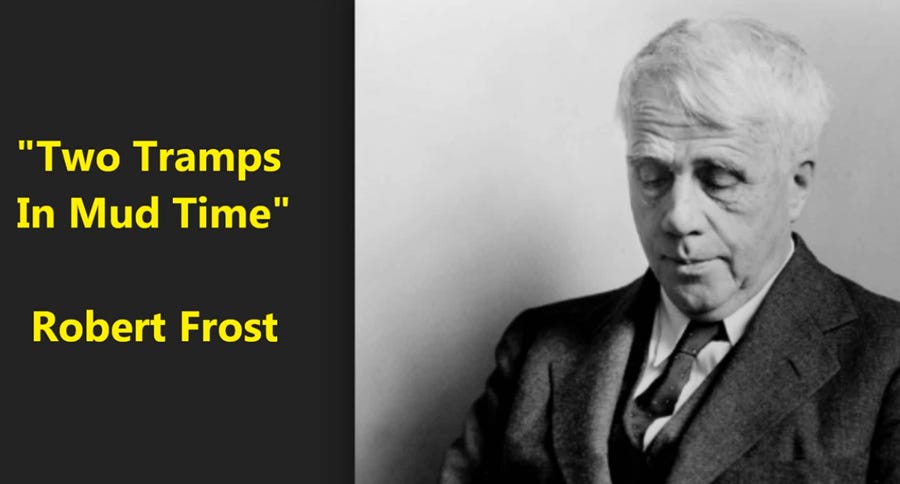
We often imagine that we are responsible for constructing our lives through sheer force of will. But true vocation does not always emerge that way. There are moments when the deepest work is not striving harder but seeing more clearly. In one 20-minute session, the poem from Robert Frost, Two Tramps in Mud Time, entered my mind with these words:
My object in living is to unite
My avocation and my vocation
As my two eyes make one in sight.
Only where love and need are one,
And the work is play for mortal stakes,
Is the deed ever really done
For Heaven and the future’s sakes.
We do not merely find our paths. When we discover what we were made to do, our paths begin finding us.
People appear whose guidance we could never have arranged. Unexpected opportunities emerge. Interests that once seemed disconnected begin fitting together with surprising elegance. Looking backward, what appeared random often resembles providence.
From the outside, my career may seem unconventional. To me, it has simply become whole.
Those childhood expeditions searching for what was thought to be an extinct bird eventually led to serving on the Recovery Team for the Ivory-billed Woodpecker at the U.S. Department of the Interior and the National Advisory Board of the National Park Service. Wait, what??? Passions I once considered hobbies became threads in the larger tapestry of my life. Birding taught me how to focus intensely on something; a skill that brought value to my work and life.
Public service remained an enduring part of that journey with service in Congress, two White Houses, and the Justice Department. Eventually I found myself creating organizations of my own, and bringing together leaders from different political parties, sectors, and backgrounds to work on public challenges. Many were people I had admired long before I ever knew them personally.
None of those ventures came with certainty. Every worthwhile undertaking carried risk. Every act of creation required faith before evidence. Sometimes I felt I was falling off a cliff with no one to rescue me.
I also discovered the importance of mentors and dear friends along the way – Dad, John DiIulio, Ray Chambers, Robert Putnam, Stan McChrystal, Ted Wiard, Tim Shriver, Brother Luke, college roommates, and high school pals.
Through all of it, I have come to believe that enthusiasm is one of the great clues to vocation. When your work becomes an expression of the gifts you have been given and the purposes you have been called to serve, people with whom you work notice something different. They recognize not merely competence, but joy. And you discover other people working in their own lanes of joy. And what initially seemed like isolated efforts start to form whole communities.
And joy has a way of becoming its own form of leadership. It may seem odd, but that is what I wish for those from the next generation who call me for advice about their careers and lives – joy from the marriage of avocation with vocation as their two eyes make one in sight.
Bridge, this is a beautiful reflection. Thank you for sharing it with us!
I loved many different parts of this, Bridge, but perhaps most of all how what can appear like serendipity can often most of all represent a dawning awareness of what’s been true and present all along!