
Renewing Our Startup Nation

There are moments when America reveals itself most clearly—not in Washington, but in the cities and towns where citizens build, serve, and solve problems together.
Last week’s summer meeting of the U.S. Conference of Mayors in Long Beach, California was such a moment.
Gathered from every corner of the nation were leaders whose stories reflected a distinctly American tradition. Many had once been entrepreneurs—starting restaurants, retail stores, home businesses and tech startups. They had created jobs, taken risks, and transformed ideas into enterprises. They entered public life with the same conviction that had guided their private endeavors: that challenges exist not merely to be endured, but to be solved.
When Oklahoma City Mayor and Conference President David Holt and I addressed the mayors in plenary session, I asked how many mayors had been entrepreneurs before entering public service. Hands rose across the room. Their response reflected more than personal biography. It reflected a belief that entrepreneurship remains central to the vitality of American communities.
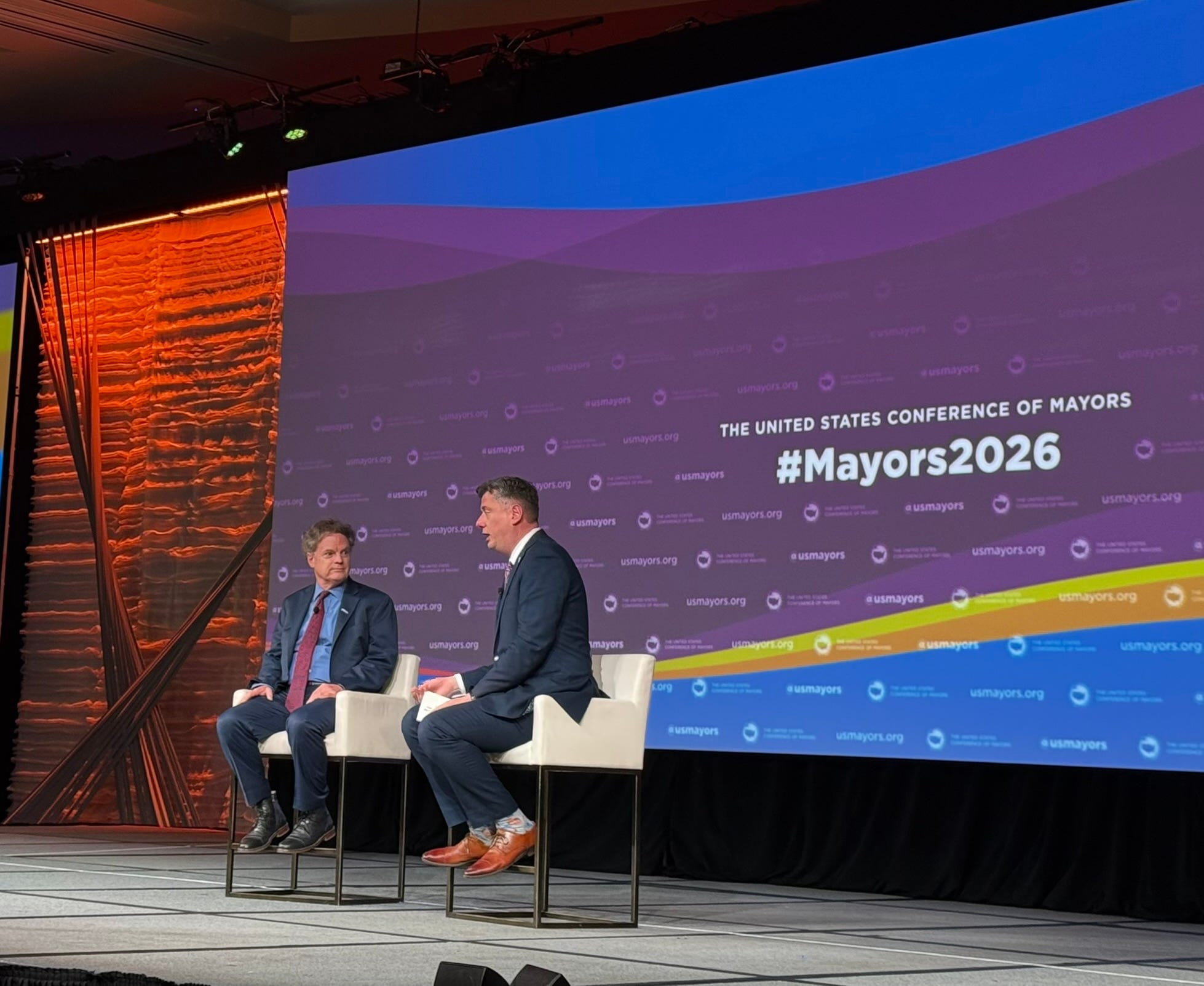
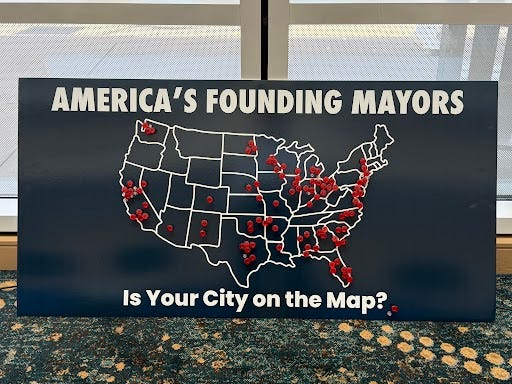
Mayor David Holt set the example by becoming the first Founding Mayor of our America the Entrepreneurial campaign and a tireless advocate for other mayors to make fueling entrepreneurship a top priority.
By the end of the conference, 116 mayors had joined our America the Entrepreneurial campaign, committing themselves to strengthening the startup spirit in their cities and towns.
Their enthusiasm arrives at a critical moment.
In a few weeks, Americans will celebrate the Declaration of Independence—both our country’s birth certificate and declaration of self-government. It represented a radical proposition: that ordinary people could govern themselves and shape their own destinies.
Today, that idea seems self-evident. In 1776, it was revolutionary.
As Ken Burns reminds us in his documentary American Revolution, at the founding of our nation, there were Kings and Queens in Europe, a Sultan in Constantinople, a Shogun in Japan, a Czarina in Russia, and an Emperor in China. Power flowed downward from thrones. Yet in Philadelphia, a group of audacious visionaries proposed something entirely different. They placed their trust not in inherited authority, but in the ingenuity and dignity of free people.
In ways they could scarcely have imagined, they were laying the foundation not only for a democratic nation, but for an entrepreneurial one.
From the beginning, America’s story has been a story of builders.
Benjamin Franklin was among the nation’s first great entrepreneurs. He transformed a struggling newspaper into a thriving publishing enterprise, created one of the most successful periodicals in colonial America, expanded printing operations across the colonies, and modernized the postal system in ways that accelerated commerce and communication.
A Mayor from Paterson, New Jersey, who had been an entrepreneur himself, reminded me that Alexander Hamilton helped establish Paterson as America’s first planned industrial city, harnessing the power of innovation and manufacturing to reduce reliance on foreign goods and becoming a center for production of silk, paper and eventually locomotives. Hamilton envisioned economic independence as essential to political independence.
The generations that followed unleashed a torrent of creativity and enterprise. Cornelius Vanderbilt connected regions through transportation. Andrew Carnegie forged the steel that built modern America. Thomas Edison illuminated cities and homes. Henry Ford democratized mobility and transformed industrial production. Oprah Winfrey built a multimedia empire that redefined entertainment, media and culture. Steve Jobs, Bill Gates, and Jeff Bezos reshaped the digital age.
Yet America’s entrepreneurial history belongs not only to famous names.
Haym Salomon, a Jewish immigrant from Poland, helped finance the cause of independence when the Revolution itself was at risk. Madam C. J. Walker, the daughter of formerly enslaved parents, built a business empire and expanded the horizon of possibility for generations of Black entrepreneurs. Robert Noyce helped invent the integrated circuit that made the modern computer age possible.
The picture wasn’t always rosy. Some efforts resulted in ruthless monopolies, exploitative working conditions, cruel child labor, environmental degradation, and dangerous wealth gaps. America has not always lived up to its promise, especially for certain populations left behind. These were all risks that would have to be mitigated and addressed over time.
The American story has always advanced through acts of imagination, courage and learning from success and failure.
Today, that story continues in every community across the country. It lives in the chef opening a first restaurant, the mechanic launching a repair shop, the plumber building a business, the artist turning talent into livelihood, and the farmer creating a diversified agrobusiness. These ventures may begin on a single street corner or field, but their impact extends far beyond it.
New businesses, not small or large businesses, remain the greatest source of net new job creation in America. They expand opportunity, lift Americans out of poverty, reduce the affordability gap, strengthen local economies, and create places where neighbors gather and communities take root.
Commerce often becomes community. Across the country, I see startups that not only create jobs, but provide places where people gather to build trust, cross divides, and solve problems.
Over the course of my career in public service, I have worked on many challenges. Few strike me as more consequential than renewing America’s entrepreneurial spirit. Especially now.
Artificial intelligence is transforming the nature of work. Economic uncertainty leaves many Americans—young and old—searching for opportunity. The social isolation accelerated by remote work continues to reshape civic life. Political division at the national level has weakened our sense of common purpose. Trust in institutions and in one another remains near historic lows.
In such a moment, entrepreneurship is more than an economic strategy. It is also civic one.
Entrepreneurship gives individuals agency in an age of anxiety. It invites people to create rather than merely react. It strengthens local communities while expanding opportunity. It reminds citizens that they possess the power to build. It connects them to a fundamental American value—the freedom to pursue our dreams.
For that reason, our More Perfect alliance selected entrepreneurship as its first civic moonshot for 2026, working alongside entrepreneurs Victor Hwang, Kim Lane, and Jason Grill at Right to Start.
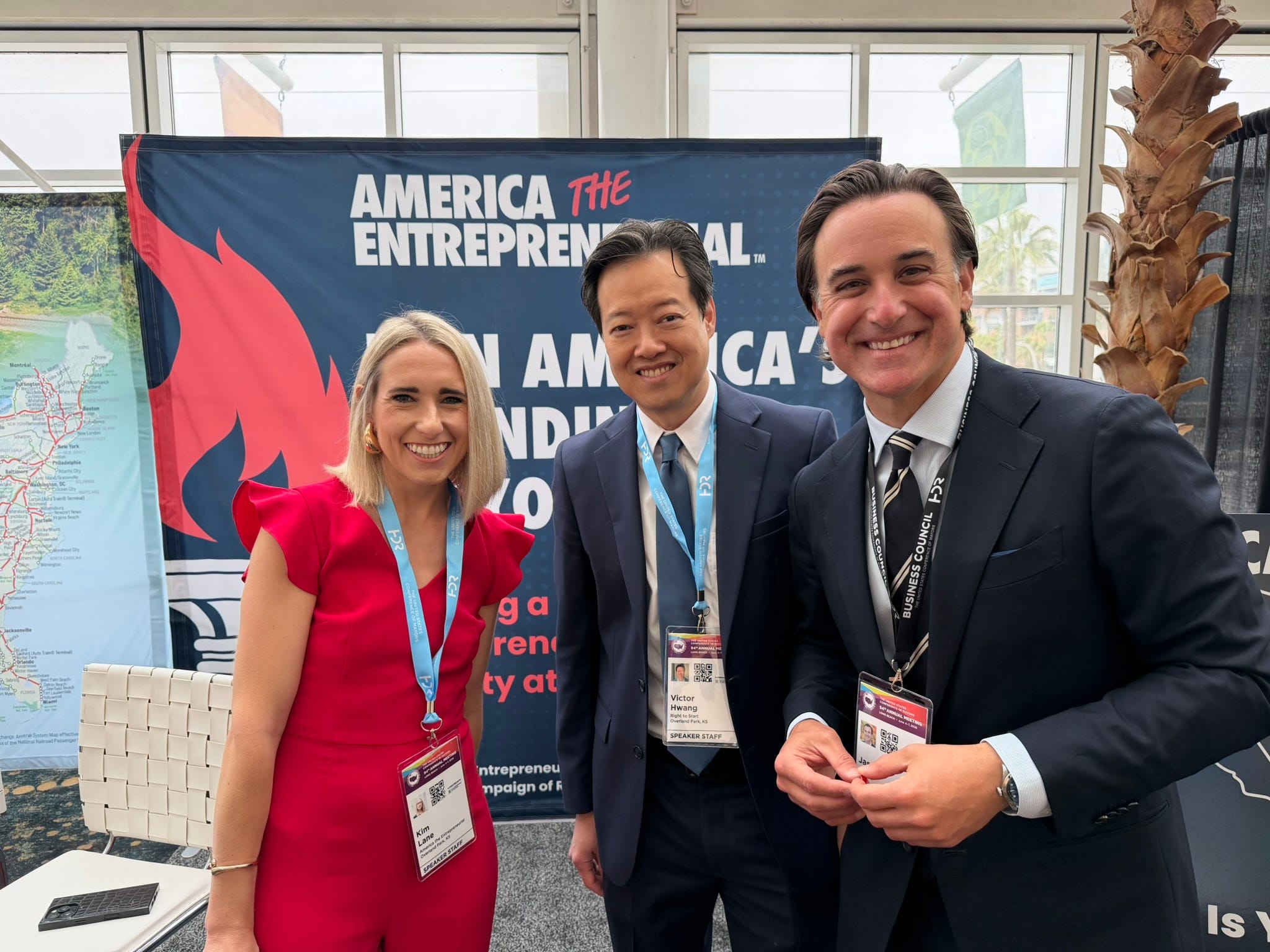
Together, we are working with mayors and governors across the country to make it easier for Americans to start and grow businesses. And we have mobilized thousands of entrepreneurs across every state to fuel this movement.
The 116 Founding Mayors who joined the America the Entrepreneurial campaign last week have committed themselves to practical reforms, which may include: streamlining regulations, reducing unnecessary barriers, creating one-stop pathways for entrepreneurs, lowering startup costs, expanding access to financing and healthcare, creating incubators and accelerators for entrepreneurs to structure, launch and grow their businesses, and establishing councils of entrepreneurs that provide direct feedback to government leaders.
At the state level, a Governors Compact on Entrepreneurship, developed in partnership with the National Governors Association, will advance similar commitments to support enterprise and innovation. NGA Chair Governor Kevin Stitt of Oklahoma and NGA Vice Chair Governor Wes Moore of Maryland are leading the way on a bipartisan basis.
The signs of possibility are already visible.
The years following the pandemic have produced a remarkable surge in business formation. Annual business applications have surpassed five million. Nearly 30 million solo entrepreneurs contribute an estimated $1.7 trillion to the American economy. A new generation of founders is emerging, including growing numbers of Gen Z entrepreneurs, immigrants, and innovators in rural and suburban communities. Initiatives such as Steve Case’s Rise of the Rest are helping expand opportunity beyond traditional centers of venture capital.
But optimism must not become complacency.
Too many entrepreneurs still struggle to secure financing. Too many startups face barriers to growth. Market concentration in key sectors can leave new entrants at a disadvantage. The entrepreneurial playing field is not always equal for disadvantaged and vulnerable populations. And while the United States remains one of the world’s great engines of innovation, alarming reductions in support for research, science, and higher education at the federal level should concern anyone who cares about America’s future competitiveness.
The lesson of our history is not that success is inevitable. It is that renewal is possible.
The founders placed a bold wager on the capacity of a free people to establish a new nation and build from the ground up. Every generation since has benefited from that act of confidence.
Now it falls to us to make a similar wager.
At this historic anniversary, let us recommit ourselves to a nation that invents, builds, and creates. Let us strengthen the conditions that allow entrepreneurs to flourish in every community. Let us undertake this work not for a year, but for at least a decade.
And when America marks the 250th anniversary of the U.S. Constitution in 2037, may we be able to say that we renewed not only our economy, but our faith in the creative power of free people—and renewed, once again, our calling as a startup nation.