
The Right to Start

Every American town has its landmarks. Some are churches. Some are schools. Some are civic associations. And some are businesses built by neighbors whose courage quietly shaped the communities we call home.
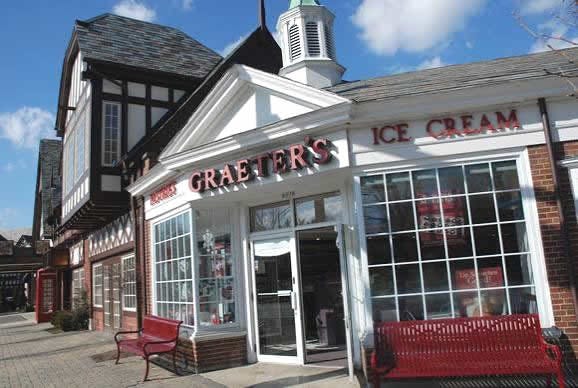
Growing up in a small town in Cincinnati, I knew those businesses well: Meyer’s Hardware, Bob’s Pony Keg, Busken Bakery, Adrien Pharmacy, Graeter’s, United Dairy Farmers, One Hour Martinizing, and the neighborhood five-and-dime. Each began as an idea, an act of faith, and someone willing to risk failure for the chance to build something that mattered.
Those storefronts sold more than goods and services. They created belonging.
You knew the owner, and the owner knew you. Conversations moved easily from groceries or prescriptions to Little League, church, school, and family. Often the person behind the counter had your order ready before you asked. I still remember Mary at United Dairy Farmers making the thick chocolate milkshakes that became part of my childhood, Kathy Graeter bringing me a pint of ice cream after a difficult tennis match, and Adrien sponsoring our baseball team and showing up at our games.
Commerce became community. Markets became neighborhoods. Business became an expression of citizenship. That is one of the truths our country too often overlooks. Entrepreneurship is not merely an engine of economic growth. It is one of the essential habits of a free society.
New businesses create almost all of America’s net new jobs. They expand opportunities for families seeking to climb the economic ladder. They foster innovation, strengthen competition, lower costs, and revitalize local economies. Yet one of their most valuable contributions may be harder to measure. They create places where relationships deepen, trust grows, and communities flourish. At a time when confidence in both institutions and one another has fallen to historic lows, America could use a stronger dose of entrepreneurship.
This instinct runs deep in our national character.
When the 25-year-old Alexis de Tocqueville traveled across America in the 1830s, he marveled that Americans possessed an uncommon habit of joining together to solve common problems. We often remember his observations about voluntary associations, but Tocqueville also recognized businesses as part of this remarkable civic ecology. Entrepreneurs embodied the same democratic spirit. They did not wait for distant institutions to improve their communities. They started where they stood—with an idea, a workshop, a storefront, or a willing partner—and created value not only for themselves but for their neighbors.
America itself began as an entrepreneurial venture, founded on the audacious belief that ordinary people could govern themselves and build a nation unlike any the world had seen.
That is why I am encouraged by an extraordinary partnership among Right to Start, More Perfect, and the National Governors Association to make entrepreneurship a national priority as America marks the 250th anniversary of its birth. Appropriately named America the Entrepreneurial, the initiative asks a simple but transformative question: How can we make it easier for every American with a dream to build an enterprise?
This past weekend, the National Governors Association highlighted both our partnership and that governors from across the political parties have signed onto the Governors Compact on Entrepreneurship, committing themselves to making startups central to their states’ economic and civic future. Republican Governor Kevin Stitt of Oklahoma and Democratic Governor Wes Moore of Maryland are leading the effort. Thirty governors have already signed the compact, with more expected to follow.
NGA CEO Brandon Tatum announces partnership with Right to Start & More Perfect


The answers are refreshingly practical.
Governors are reducing the cost of starting a business—some to as little as one dollar. They are eliminating outdated regulations that discourage innovation before it begins. States are creating one-stop centers that simplify the journey from idea to enterprise. Incubators and accelerators are expanding mentorship, investment, and technical assistance. Entrepreneurship councils are giving founders a direct voice in shaping public policy and an ability to share their stories, while chief entrepreneurship officers and other officials are bringing sustained focus and accountability to state government.
These are not partisan reforms. They are American ones. And the movement extends well beyond state capitals.
At the summer meeting of the U.S. Conference of Mayors, under the leadership of Mayor David Holt, a Republican from Oklahoma City, a call to action and a concrete menu of opportunities inspired over 120 mayors from every region of the country to become Founding Mayors of America the Entrepreneurial. They represent cities large and small—from Los Angeles to Muncie, Indiana, from Hampton, Virginia, to Pea Ridge, Arkansas. They are Democrats, Republicans, and Independents.
Each brought a story that reminded us why entrepreneurship matters.


One mayor recalled Alexander Hamilton’s vision for one of America’s first planned industrial cities, where manufacturing transformed a young republic. Another described a business accelerator helping local entrepreneurs finance and grow their businesses while changing lives in the surrounding community. Still another spoke about the county where President Lyndon Johnson launched the War on Poverty, arguing that entrepreneurship remains one of the most effective pathways to lasting economic mobility.
Different communities. Different politics. One shared conviction: when more Americans can build businesses, more Americans can build better lives.
Too much of our national conversation is trapped in a cycle of outrage. We spend endless hours rehearsing our disagreements while spending too little time imagining what we might build together. We rightly worry about polarization, declining trust, global instability, assaults on democratic institutions, and the weakening of civic life.
These challenges are real. But there is another danger that receives far less attention. We risk forgetting who we are.
America has never been defined primarily by the reach of its government or the decisions of one leader. It has been defined by the initiative of its citizens. Ours is a nation built on the conviction that ordinary people, given freedom and opportunity, can accomplish extraordinary things.
That spirit has not disappeared. It is waiting to be unleashed. More than six in ten Americans say they would like to start a business someday. Yet fewer than four percent do each year, often because unnecessary barriers stand between aspiration and action. Those barriers suppress more than economic growth. They diminish hope itself.
The good news is that those barriers are beginning to fall. America is experiencing one of the strongest surges in new business creation in generations, outpacing other developed nations. Across the country, innovators, builders, and dreamers are demonstrating that the American instinct to create has not faded. It has simply been waiting for permission, encouragement, and a fair chance.
This November, shortly after the midterm elections, entrepreneurs, governors, mayors, investors, philanthropists, educators, and civic leaders will gather for the America the Entrepreneurial Summit—not to relive yesterday’s political arguments, but to imagine tomorrow’s opportunities.
That is a conversation worthy of America—a startup nation itself.
The Declaration of Independence affirms our unalienable rights to life, liberty, and the pursuit of happiness. For generations, Americans have understood that pursuit to include the freedom to build, to invent, to create, and to serve others through enterprise.
The right to start is more than an economic opportunity. It is an expression of human dignity. It is an act of hope. And it remains one of America’s greatest promises.
To find out more about America the Entrepreneurial, see who is involved, and join the campaign, visit our site. To take action to help fuel this movement, see the opportunities here.
America’s greatness has never been built from the top down. It has always been built from the ground up—one idea, one storefront, one enterprise, one community at a time.
John Bridgeland is Co-Chair of America the Entrepreneurial & Founder & CEO of More Perfect.
Those were the days!
Fantastic! So glad that you are a big part of this. And thank you for setting the scene that most of us know and grew up with - whether Cinci or NJ, we know the 'mom + pops' well 💙